Pharmacy education in India just had its biggest shake-up in a decade, especially with the introduction of the B.Pharm NEP syllabus 2026.
On June 9, 2026, the Pharmacy Council of India (PCI) dropped the new NEP-2020-aligned B.Pharm NEP syllabus 2026. It hit the Gazette of India a day later, on June 10. And it’s already rolling out for every student who enrolls in the 2026-27 academic year.
Here’s the thing: this isn’t a minor tweak. It’s a full rebuild.
Fewer credits. More flexibility. AI baked into every single year. If you’re a B.Pharm student, teacher, or someone planning admissions this year, you need to understand exactly what’s different — because it affects your exams, your electives, your internships, and even how your final grade gets calculated.
Let’s break it all down, one piece at a time.
📄 Download the Official PCI B.Pharm NEP syllabus 2026 PDF → Click here to download
The Core Philosophy Shift
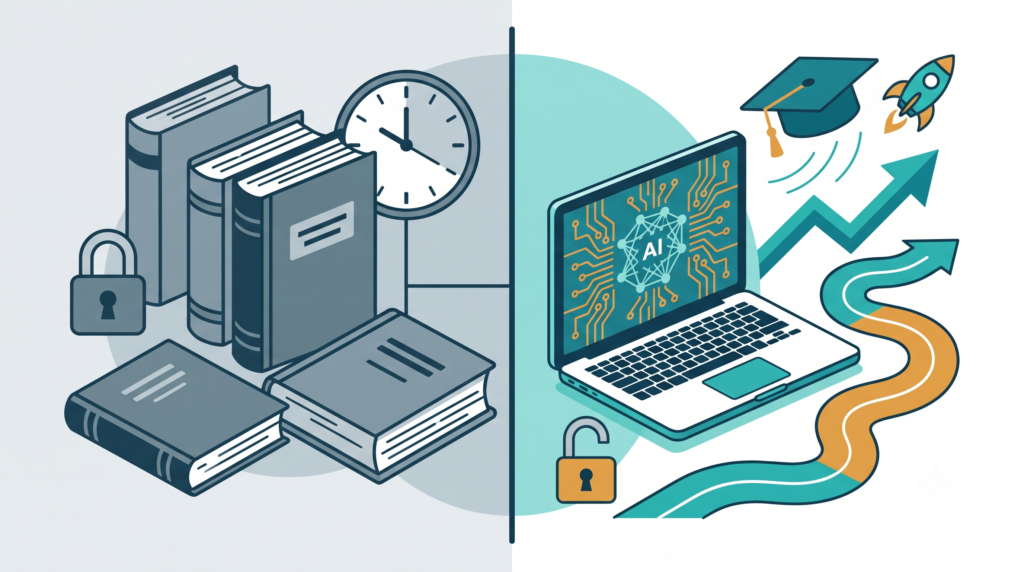
The old syllabus (2014 regulations, effective 2016-17) was built the traditional way:
- Heavy focus on Pharmaceutics, Pharmaceutical Analysis, Pharmacology, and Organic/Inorganic Chemistry — starting day one
- Elective choices? Almost none, and the few that existed were crammed into Semester 8
The new 2026 syllabus flips that model on its head. It still respects the core sciences — that foundation isn’t going anywhere — but it aggressively layers in:
- Digital & tech skills: Python, data analytics, automation — from Semester 1
- Academic flexibility: AEC, SEC, and VAC electives spread across five semesters instead of one
- Innovation training: startup mindset, leadership, problem-solving baked into the curriculum
Bottom line: the new syllabus treats you less like a student memorizing textbooks and more like a future industry professional who needs real, transferable skills.
B.Pharm NEP syllabus 2026 PDF Download (Official Link)
This new curriculum was officially notified by the Pharmacy Council of India and published in the Gazette of India on June 10, 2026. If you want the exact, unedited government document — course codes, credit tables, and all — here’s the official source:
📄 Download the Official B.Pharm 2026 Syllabus PDF (PCI)
The New Credit System (This Changes Everything)
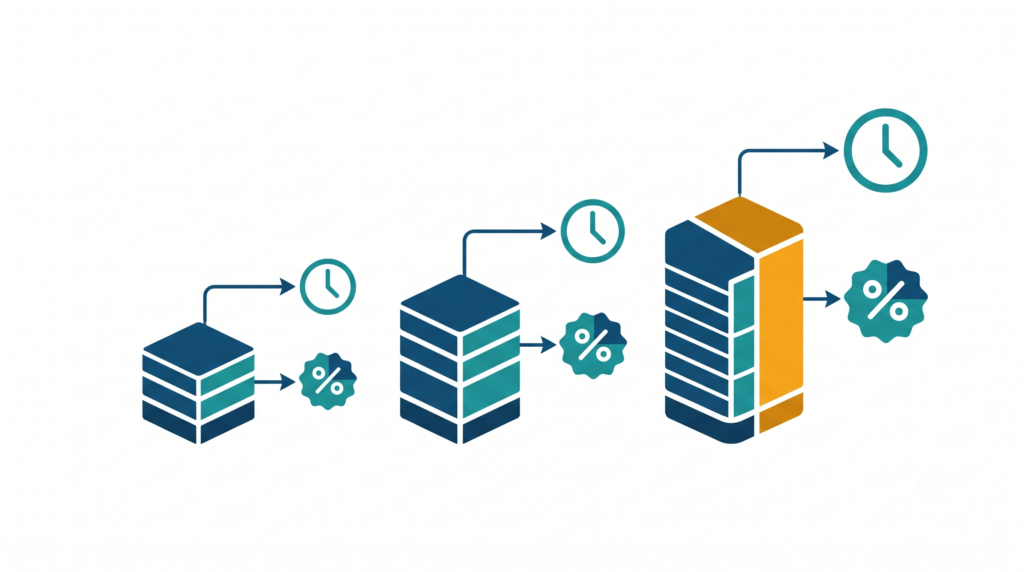
If there’s one number that defines this whole overhaul, it’s this: credits dropped from 208+ to 193.
That’s not just “less work.” It restructured the entire exam framework. Here’s how credits now map to marks and exam duration:
| Credit Value | Total Marks | Split | Exam Duration |
|---|---|---|---|
| 4 credits | 100 marks | 40 Internal + 60 End-Sem | 3 hours |
| 3 credits | 75 marks | 30 Internal + 45 End-Sem | 2 hours |
| 1–2 credits | 50 marks | 20 Internal + 30 End-Sem | 1.5 hours |
Simple rule to remember: more credits = more marks = longer exam.
Passing Criteria: The Rule That’ll Actually Relieve You
Good news first — the passing bar is still 50% overall in a subject, same as before.
But here’s the real win in the new syllabus: you no longer need to pass internals and end-semester exams separately. They’re combined.
So say a subject is worth 100 total marks (40 internal + 60 end-sem). If you scored 35/40 in internals, you only need 15/60 in your end-semester exam to pass. That’s it. One combined threshold, not two separate hurdles.
This single change alone will save a lot of students from unnecessary semester backlogs.
Semester Promotion: No More Mid-Course Roadblocks
The old system was brutal:
- Couldn’t touch Semester 5 material until you cleared all of Semesters 1 and 2
- Couldn’t sit for Semester 7 until you’d cleared everything through Semester 4
The new syllabus removes those checkpoints almost entirely. You can move forward even if you fail a course along the way.
There’s only one non-negotiable rule left: you must clear everything through Semester VII before you’re allowed to sit for your final Semester VIII exams.
Translation: fewer stalled degrees, more momentum.
Marks Distribution & Question Paper Pattern
Here’s exactly how your internal and end-semester papers break down by credit weight.
End-Semester Theory Paper Pattern
4-Credit Course (60 Marks, 3 Hours):
- 20 marks → MCQs/objective (compulsory)
- 20 marks → Short answers (5 of 7, 4 marks each)
- 20 marks → Long answers (2 of 3, 10 marks each)
3-Credit Course (45 Marks, 2 Hours):
- 10 marks → MCQs/objective (compulsory)
- 20 marks → Short answers (5 of 7, 4 marks each)
- 15 marks → Long answers (2 of 3, 7.5 marks each)
1–2 Credit Course (30 Marks, 1.5 Hours):
- 10 marks → MCQs/objective (compulsory)
- 10 marks → Short answers (5 of 7, 2 marks each)
- 10 marks → Long answers (2 of 3, 5 marks each)
Practical Exams (1–2 Credit Courses)
- Synopsis → 7.5 marks
- Major experiment → 10 marks
- Minor experiment → 5 marks
- Viva voce → 7.5 marks
Internal Assessment Paper Pattern (Theory)
4-Credit Course (20 Marks, 1 Hour):
- 4 marks → MCQs (compulsory)
- 6 marks → Short answers (2 of 3, 3 marks each)
- 10 marks → Long answers (1 of 2, 10 marks each)
3-Credit Course (15 Marks, 1 Hour):
- 2 marks → MCQs (compulsory)
- 6 marks → Short answers (2 of 3, 3 marks each)
- 7 marks → Long answers (1 of 2, 7 marks each)
1–2 Credit Course (10 Marks, 1 Hour):
- 2 marks → MCQs (compulsory)
- 3 marks → Short answers (1 of 2, 3 marks each)
- 5 marks → Long answers (1 of 2, 5 marks each)
Internal Practicals (10 Marks): Synopsis (2) + Major experiment (4) + Minor experiment (2) + Viva (2)
Dynamic Electives: AEC, SEC, VAC Explained
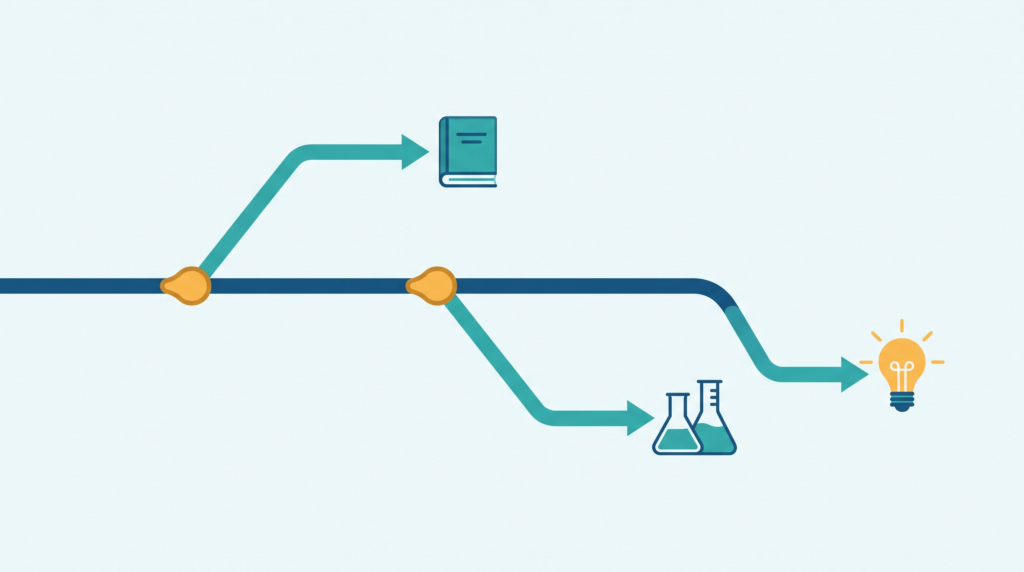
Old syllabus = 2 electives, jammed into Semester 8, take it or leave it.
New syllabus = electives spread across Semesters II, III, VI, VII, and VIII, each worth 1 credit. Here’s your roadmap:
Semester II — Skill Enhancement Course (choose 1)
- Communication Skills
- Mental Well-Being, Stress & Conflict Management
- Fundamentals of Computer Operations
Semester III — Ability Enhancement Course (choose 1)
- Nutraceuticals and Functional Foods
- Food Analysis
- Yoga and Life Sciences
Semester VI — Your Most Flexible Semester (choose 3, one from each category)
AEC (Theory): Green Chemistry / Materiovigilance and Hemovigilance / Scientific Writing / Drug Store and Business Management / Career Building in Cultivation of Medicinal Plants / Active Pharmaceutical Ingredients and Excipient Sciences
SEC (Practical): Computer-Aided Drug Design / Analytical Method Development and Validation / Principles of Preclinical Studies
VAC (Practical): Professional Skills / Process Analytical Technology (PAT) and QbD in Formulation Science
Semester VII — AEC (choose 1, Theory)
Current Good Manufacturing Practices (cGMP) / Pharmaceutical Automation / Modern Techniques in Cellular Biology / Medical Devices / Transformation of Food Waste into Medicinal Products / Biosimilars, Vaccines & Macromolecules / Precision Medicine
Semester VIII — AEC (choose 1, Theory) + VAC (choose 1, Practical)
AEC: Pharmaceutical Packaging / Supply Chain Management / Industrial Safety and Waste Management / Traditional Healing Practices of India / Futuristic Pharma through AR/VR: Pharma 4.0 / Herbal Cosmetics for Industry Perspective
VAC: Cleaning Validation / Basic Training in Aseptic Handling Techniques / Impurity Profiling
The AI & Digital Subjects You Can’t Ignore

This is the headline feature of the whole reform. Every single year of the degree now includes a dedicated AI/data subject:
| Semester | Subject | Focus |
|---|---|---|
| I | Basics of Python Programming for Pharmaceutical Sciences | Python fundamentals, NumPy, Pandas for pharma datasets |
| II | Applied Biostatistics and Data Analytics | Statistical methods, SciPy, Scikit-learn for clinical research |
| III | Introduction to Machine Learning in Pharmaceutical Sciences | ML workflows, regression/classification for healthcare data |
| VI | AI Applications in Pharmaceutical Sciences | Predictive modeling, formulation optimization, manufacturing control |
| VII | AI in Clinical Applications | Pharmacokinetics, precision medicine, EHR-based decision support |
| VIII | Ethical Considerations and Translational Applications of AI in Pharmacy | Model validation, auditing, bias, privacy, regulatory frameworks |
If you’re a student wondering “why do I need to learn Python in pharmacy school?” — this table is your answer. The industry is moving toward data-driven drug development, and PCI is making sure graduates aren’t left behind.
Full Semester-Wise Credit Breakdown
Semester I (Total: 21 credits)
| Code | Subject | Credits |
|---|---|---|
| BP101T | Basics of Python Programming for Pharmaceutical Sciences (Theory) | 2 |
| BP102T | General Pharmacy (Theory) | 3 |
| BP103T | Healthcare Psychology and Communication Skills (Theory) | 1 |
| BP104T | Human Anatomy, Physiology and Pathophysiology I (Theory) | 4 |
| BP105T | Introduction to Pharmacognosy (Theory) | 3 |
| BP106T | Pharmaceutical Inorganic and Analytical Chemistry (Theory) | 3 |
| BP107P | General Pharmacy (Practical) | 1 |
| BP108P | Healthcare Psychology and Communication Skills (Practical) | 1 |
| BP109P | Human Anatomy, Physiology and Pathophysiology I (Practical) | 1 |
| BP110P | Introduction to Pharmacognosy (Practical) | 1 |
| BP111P | Pharmaceutical Inorganic and Analytical Chemistry (Practical) | 1 |
Semester II (Total: 26 credits)
| Code | Subject | Credits |
|---|---|---|
| BP201T | Applied Biostatistics and Data Analytics for Pharmaceutical Sciences (Theory) | 2 |
| BP202T | Biochemistry (Theory) | 3 |
| BP203T | Human Anatomy, Physiology and Pathophysiology II (Theory) | 4 |
| BP204T | Pharmaceutical Organic Chemistry (Theory) | 4 |
| BP205T | Pharmacognosy and Phytochemistry (Theory) | 4 |
| BP206T | Physical Pharmaceutics (Theory) | 3 |
| BP207P | Biochemistry (Practical) | 1 |
| BP208P | Human Anatomy, Physiology and Pathophysiology II (Practical) | 1 |
| BP209P | Pharmaceutical Organic Chemistry (Practical) | 1 |
| BP210P | Pharmacognosy and Phytochemistry (Practical) | 1 |
| BP211P | Physical Pharmaceutics (Practical) | 1 |
| BP212P | SEC (Choose 1) | 1 |
Semester III (Total: 25 credits)
| Code | Subject | Credits |
|---|---|---|
| BP301T | Introduction to Machine Learning in Pharmaceutical Sciences (Theory) | 2 |
| BP302T | Environmental Sciences (Theory) | 1 |
| BP303T | Ethics and Universal Human Values (Theory) | 1 |
| BP304T | General Pharmacology (Theory) | 3 |
| BP305T | Heterocyclic Compounds and Stereochemistry (Theory) | 3 |
| BP306T | Pharmaceutical Dosage Forms I (Theory) | 3 |
| BP307T | Pharmaceutical Engineering (Theory) | 3 |
| BP308T | Pharmaceutical Microbiology (Theory) | 3 |
| BP309P | General Pharmacology (Practical) | 2 |
| BP310P | Heterocyclic Compounds and Stereochemistry (Practical) | 2 |
| BP311P | Pharmaceutical Dosage Forms I (Practical) | 1 |
| BP312P | AEC (Choose 1) | 1 |
Semester IV (Total: 23 credits)
| Code | Subject | Credits |
|---|---|---|
| BP401T | Herbal Drug Technology (Theory) | 3 |
| BP402T | Medicinal Chemistry (Theory) | 3 |
| BP403T | Pharmaceutical Biotechnology (Theory) | 3 |
| BP404T | Social Pharmacy and Public Health (Theory) | 2 |
| BP405T | Systemic Pharmacology I (Theory) | 3 |
| BP406P | Herbal Drug Technology (Practical) | 1 |
| BP407P | Medicinal Chemistry (Practical) | 1 |
| BP408P | Pharmaceutical Biotechnology (Practical) | 1 |
| BP409P | Social Pharmacy and Public Health (Practical) | 1 |
| BP410P | Systemic Pharmacology I (Practical) | 1 |
| BP411I | Internship (Mandatory) | 4 |
Semester V (Total: 22 credits)
| Code | Subject | Credits |
|---|---|---|
| BP501T | Biomedicinal Chemistry (Theory) | 3 |
| BP502T | Industrial Pharmacognosy (Theory) | 3 |
| BP503T | Innovation and Startup Ecosystem (Theory) | 2 |
| BP504T | Pharmaceutical Dosage Form II (Theory) | 2 |
| BP505T | Pharmaceutical Quality Assurance (Theory) | 3 |
| BP506T | Systemic Pharmacology II (Theory) | 3 |
| BP507P | Biomedicinal Chemistry (Practical) | 2 |
| BP508P | Industrial Pharmacognosy (Practical) | 1 |
| BP509P | Pharmaceutical Dosage Form II (Practical) | 1 |
| BP510P | Systemic Pharmacology II (Practical) | 2 |
Semester VI (Total: 26 credits)
| Code | Subject | Credits |
|---|---|---|
| BP601T | Advanced Pharmacognosy (Theory) | 3 |
| BP602T | Biopharmaceutics and Pharmacokinetics (Theory) | 3 |
| BP603T | Intellectual Property Rights (Theory) | 2 |
| BP604T | AI Applications in Pharmaceutical Sciences (Theory) | 2 |
| BP605T | Pharmaceutical Analysis (Theory) | 3 |
| BP606T | Pharmaceutical Jurisprudence (Theory) | 3 |
| BP607T | AEC (Choose 1) | 1 |
| BP608P | Biopharmaceutics and Pharmacokinetics (Practical) | 1 |
| BP609P | Pharmaceutical Analysis (Practical) | 2 |
| BP610P | SEC (Choose 1) | 1 |
| BP611P | VAC (Choose 1) | 1 |
| BP612I | Internship (Mandatory) | 4 |
Semester VII (Total: 26 credits)
| Code | Subject | Credits |
|---|---|---|
| BP701T | Biostatistics Research Methodology (Theory) | 3 |
| BP702T | Cosmetics and Cosmeceuticals (Theory) | 2 |
| BP703T | AI in Clinical Applications (Theory) | 2 |
| BP704T | Modern Analytical Techniques (Theory) | 3 |
| BP705T | Pharmacovigilance (Theory) | 3 |
| BP706T | Pharmacy Practice (Theory) | 3 |
| BP707T | Regulatory Affairs (Theory) | 2 |
| BP708T | AEC (Choose 1) | 1 |
| BP709P | Modern Analytical Techniques (Practical) | 1 |
| BP710RP | Research Project | 6 |
Semester VIII (Total: 24 credits)
| Code | Subject | Credits |
|---|---|---|
| BP801T | Ethical Considerations and Translational Applications of AI in Pharmacy (Theory) | 2 |
| BP802T | Clinical Pharmacotherapeutics (Theory) | 2 |
| BP803T | Industrial Pharmacy and Facility Design (Theory) | 3 |
| BP804T | Pharmaceutical Management (Theory) | 2 |
| BP805T | Sterile Dosage Forms and Novel Drug Delivery System (Theory) | 3 |
| BP806T | AEC (Choose 1) | 2 |
| BP807P | Pharmaceutical Marketing Skills (Practical) | 1 |
| BP808P | Sterile Dosage Forms and Novel Drug Delivery System (Practical) | 2 |
| BP809P | VAC (Choose 1) | 1 |
| BP810RP | Research Project | 6 |
Internships & Research: Real Industry Exposure, Not Paperwork

The old syllabus treated industry training as an afterthought — a rushed 8th-semester project plus “desirable” (optional) 150 hours of training.
The new syllabus makes it mandatory and heavily credited.
Mandatory Internships — 240 hours / 8 credits total
- Split across Semester IV (4 credits) and Semester VI (4 credits)
- Approved sectors: Pharmaceutical, Cosmetics, Medical Devices, Food Industry, Hospitals, Community Pharmacy, or clinical research organizations
- Each internship graded out of 100 marks (75 for certificate/report + 25 for presentation/discussion)
Year-Long Research Project — 12 credits total
- Split across Semester VII (6 credits, 150 marks) and Semester VIII (6 credits, 150 marks)
- You start the research theme in Semester VII, get evaluated at a milestone checkpoint, then carry it through to Semester VIII
- External mentors from industry, hospitals, or NABL/CDSCO-approved labs are encouraged
- Group size capped at 3 students (down from 5 in the old syllabus) — meaning more hands-on ownership per student
Grading System: SGPA, CGPA, and Your Final Degree Class
Grade Conversion Table
| Percentage | Grade | Grade Points |
|---|---|---|
| 90.00–100% | O (Outstanding) | 10 |
| 80.00–89.99% | A (Excellent) | 9 |
| 70.00–79.99% | B (Good) | 8 |
| 60.00–69.99% | C (Fair) | 7 |
| 50.00–59.99% | D (Average) | 6 |
| Below 50% | F (Fail) | 0 |
| Absent | AB (Fail) | 0 |
SGPA (Semester Grade Point Average):
SGPA = (C₁G₁ + C₂G₂ + … ) / (C₁ + C₂ + …) — a weighted average of grade points across that semester’s courses, calculated to two decimal points. Fail and Absent grades pull this number down hard since they contribute zero points.
CGPA (Cumulative Grade Point Average):
Takes the SGPA from all 8 semesters, weights each by that semester’s total credits, and averages across your entire degree — also to two decimal points.
Final Degree Classification (based on CGPA):
- First Class with Distinction: 7.50 and above
- First Class: 6.00 to 7.49
- Second Class: 5.00 to 5.99
Converting to Percentage: Multiply your CGPA/SGPA by 10.0. A CGPA of 7.50 = 75.0%.
The Bottom Line
The 2026 B.Pharm syllabus isn’t just a smaller credit load — it’s a fundamentally different degree.
Here’s what you’re really getting:
- Fewer credits (193 vs 208+), but smarter distribution
- Combined internal + end-sem passing criteria that’s genuinely more forgiving
- No more mid-course roadblocks stalling your progress
- Five semesters of elective choice instead of one
- AI and Python woven into every single year, not bolted on at the end
- Mandatory 240-hour internships and a year-long 12-credit research project
If you’re entering B.Pharm in 2026 or later, this is the degree you’re getting — and honestly, it’s built for where the pharmaceutical industry is actually headed: data-driven, tech-integrated, and research-focused from day one.
Bookmark this page. You’ll want to come back to it every semester.
And if you need the source document for your records or to double-check anything with your institution, grab the official PCI B.Pharm Syllabus 2026 PDF here.
FAQ
Is the new syllabus harder than the old syllabus?
The new syllabus is not necessarily “harder,” but it is more modern and technology-focused. While the old syllabus was heavily packed with traditional pharmaceutical sciences, the new curriculum introduces exciting digital skills like Python, Machine Learning, and Artificial Intelligence
. Additionally, it actually reduces the overall credit burden from 208 to 193 credits, making the workload more streamlined and flexible
How much percent attendance is required from the old syllabus to the new syllabus?
The attendance requirement has been relaxed slightly. Under the old syllabus, you needed at least 80% attendance in theory and practical’s. In the new 2026 syllabus, this requirement has been reduced to a minimum of 75% attendance for each course
Is any exit exam required to apply for a license in the new syllabus?
The provided official syllabus documents for both the old and new curriculum do not contain any information regarding a mandatory exit exam for licensing. Please note: You may want to independently verify current licensing and exit exam regulations directly with the Pharmacy Council of India (PCI) guidelines, as this information is outside the scope of the syllabus documents.
What is the National Education Policy (NEP) 2020?
The NEP 2020 is India’s transformative educational framework. The new 2026 B. Pharm syllabus was specifically designed according to the NEP 2020 vision to strengthen practical learning, offer greater academic flexibility through electives, and integrate digital technologies, ensuring graduates are fully prepared for the modern healthcare sector
What is the main goal of the new syllabus compared to the old one?
The main goal of the new syllabus is to bridge the gap between traditional pharmacy and the digital revolution. It aims to equip future pharmacists with hands-on practical competencies, a research-oriented mindset, and an understanding of Artificial Intelligence (AI) and data analytics in drug discovery—areas that were completely missing in the old syllabus
In how many semesters are Internships included?
Internships are given much more importance in the new syllabus.
Old Syllabus: Required a “Practice School” of 150 hours during the 7th semester.
New Syllabus: Requires two mandatory internships of 120 hours each (4 credits each). These take place in Semester 4 and Semester 6, bringing the total real-world training to 240 hours
What is the difference in the 8th-semester project in the new and old syllabus?
Old Syllabus: The project was completed entirely within the 8th semester in groups of up to 5 students.
New Syllabus: The research project is much more comprehensive. It now starts in the 7th semester and continues into the 8th semester. You will work in smaller, more focused groups of maximum 3 students, and the new rules highly encourage working with external mentors from the industry or hospitals
What are the passing criteria for the new syllabus compared to the old syllabus?
The passing criteria remain exactly the same. Under both the old and new regulations, you must secure a minimum of 50% marks in a particular course to pass. This 50% is calculated by combining both your internal assessment marks and your end-semester examination marks
In which month are exams conducted in the new vs. old syllabus?
The academic calendar and exam months are unchanged. In both the old and new syllabi, odd semester exams (Semesters 1, 3, 5, 7) are conducted in November/December, and even semester exams (Semesters 2, 4, 6, 8) are conducted in May/June
I am from a PCB (or PCM) background. Do I still need to study Remedial Mathematics or Remedial Biology?
Absolutely not. Under the old rules, your first semester was heavily dictated by what you studied in 10+2, forcing you to take remedial classes
. The new syllabus has completely removed these subjects, meaning every first-year student will study the exact same uniform 21-credit curriculum from day one
How have the exam durations changed?
This is one of the most student-friendly changes. In the old syllabus, almost all subjects required a marathon 3-hour final exam for 75 marks
. In the new syllabus, exam duration scales dynamically based on the subject’s credits. Heavy 4-credit courses still require a 3-hour exam (60 marks), but standard 3-credit courses only require a 2-hour exam (45 marks), and minor 1 or 2-credit tech/elective courses require just a quick 1.5-hour exam (30 marks)
What digital and AI technologies are taught in the new syllabus?
The 2026 syllabus prepares students for the digital healthcare revolution by mandating modern tech subjects. Core subjects include Basics of Python Programming (Semester I)
, Applied Biostatistics and Data Analytics (Semester II)
, Introduction to Machine Learning (Semester III)
, AI applications in Pharmaceutical Sciences (Semester VI)
, and AI in Clinical applications (Semester VII)